
The 5 Ways to Fix a Slab Leak
Here is the full menu, in plain English:
- Spot repair — open the concrete at the exact leak location and fix that section of pipe.
- Pipe rerouting — abandon the leaking run and install a new pipe through walls, ceiling, or along the house, bypassing the slab entirely.
- Epoxy pipe lining — coat the inside of the existing pipe with epoxy so the leak is sealed without opening the floor (trenchless).
- Tunneling — dig under the slab from outside to reach the pipe, repairing it without breaking your interior floor.
- Whole-house repiping — replace the failing plumbing system end to end, used when leaks keep recurring.
Which one fits depends on the number of leaks, the age of your pipes, what's above the leak, and how much disruption you can tolerate. The rest of this guide walks each one honestly, then hands you a decision table.
The Step You Can't Skip: Locate the Leak First
No reputable plumber quotes a repair before the leak is located. Repairing "somewhere under the living room" is a fantasy; the options below differ in cost and damage precisely because they depend on knowing the leak's position within inches.
Detection is its own service — acoustic listening equipment, thermal imaging, and pressure testing — and it happens before the repair conversation, not during it. The detection report tells the plumber which of the five methods is even on the table: a single confirmed pinhole supports spot repair; a report showing corrosion in multiple runs pushes toward reroute or repiping.
Treat detection and repair as two separate decisions with two separate quotes. A provider who wants to jackhammer before locating the leak is selling you the expensive guess.
Spot Repair: Open the Slab, Fix the Section
The most literal fix: break a hole in the concrete above the leak, cut out the damaged pipe section, and install a new one, then patch the slab and the flooring.
When it's the right call: a single confirmed leak, a relatively young plumbing system, and inexpensive flooring above the spot. The opening is surgical — typically a few feet across — so the disruption is limited to one room.
Honest trade-offs: the repair only fixes that one section. If the pipe is old or your water is hard on copper, a second leak can appear in the same run a year later, and you're paying for concrete work again. Excavation near load-bearing sections also deserves a check that the slab's structural support is restored properly — a foundation repair specialist weighs in when the dig is large.
Reroute the Pipe Around the Slab
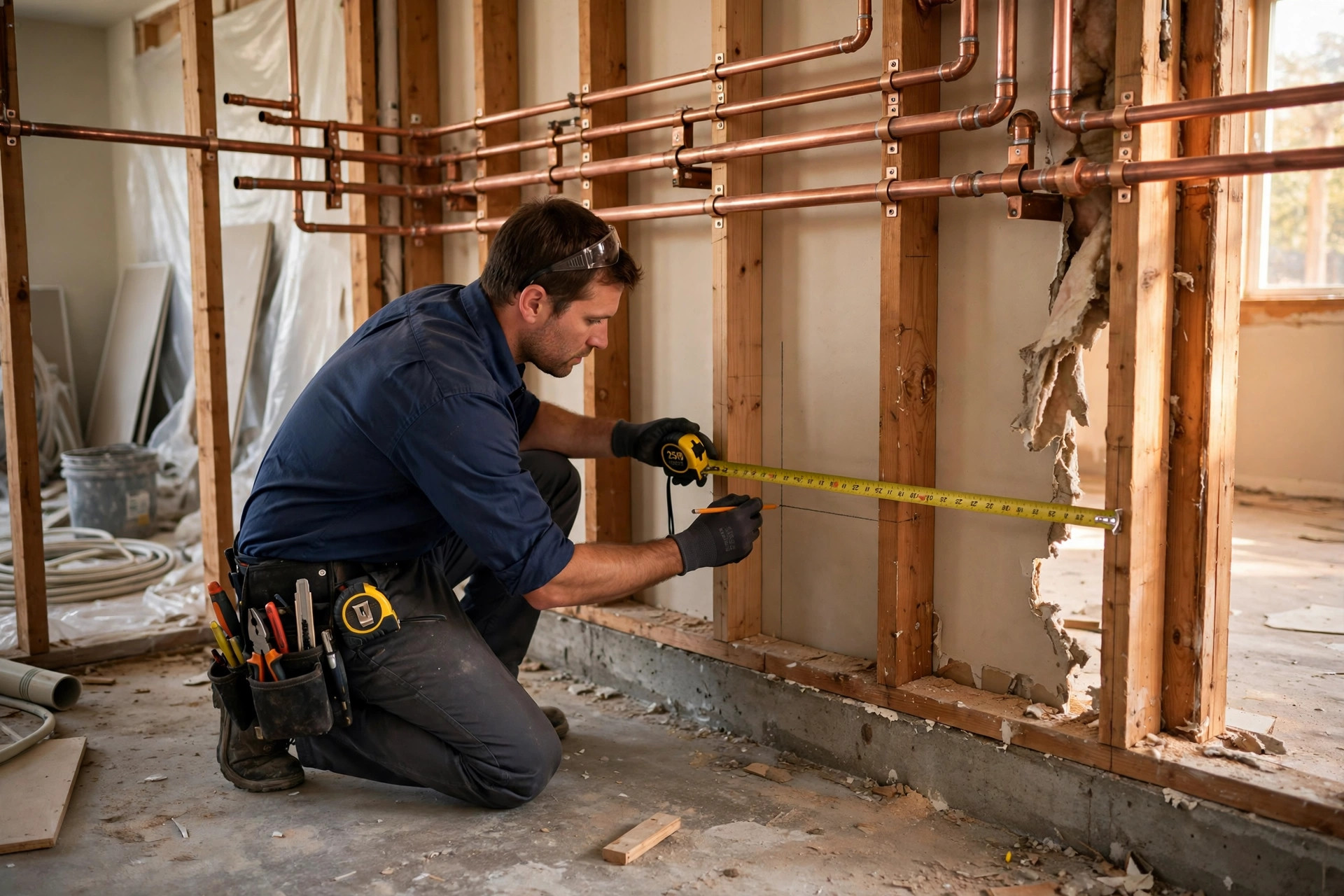
Instead of opening the concrete, the plumber abandons the leaking section and installs a new pipe through walls, the attic, or along the home's perimeter. The old pipe stays buried and is simply taken out of service.
When it's the right call: this is the most common recommendation for a reason — rerouting avoids concrete demolition entirely, plasterboard and paint are far cheaper to restore than tile and hardwood, and the new pipe runs in accessible space where future problems are easy to reach. For Edmond homes, there's an extra argument: central Oklahoma's expansive clay soil swells and shrinks around buried pipe, which is part of why leaks recur here. A reroute gets the new pipe out of that soil. Learn more about pipe rerouting as a service.
Honest trade-offs: it does require cutting into walls and ceilings along the new path, so there's cosmetic work after. It's also not the answer when the whole system is failing — rerouting one run of a rotting system just moves the problem's address.
Epoxy Pipe Lining: The Trenchless Seal
A technician accesses the pipe, cleans it, and applies an epoxy coating to its interior that hardens into a new pipe-within-a-pipe, sealing the leak without breaking the floor. This is the trenchless pipe repair option for slab leaks.
When it's the right call: small leaks in pipes with enough remaining integrity and diameter to accept a liner. It's genuinely low-disruption — no demolition, no new holes through the structure.
Honest trade-offs: lining seals the leak but doesn't renew old pipe to new-pipe strength, and it's the poorest fit for collapsed, badly scaled, or undersized lines. It also tends to be the least broadly applicable of the five — if your pipe's condition is the problem, lining papers over it. (A dedicated look at trenchless options is coming in this series.)
Tunneling Under the Slab
Workers dig a tunnel from outside the home, beneath the foundation, to reach the leaking pipe from below — repairing or replacing it without breaking the interior floor above.
When it's the right call: when the flooring above the leak is expensive or impractical to disturb (high-end tile, finished hardwood) and the leak's position allows an approach from outside. Your living room stays intact; the work happens below grade.
Honest trade-offs: it's labor-intensive — digging a working tunnel by hand or machine under an existing slab takes time, and the cost of that labor is real. Soil conditions matter too: Edmond's dense clay can slow the digging. This is a niche answer, not a default.
Whole-House Repiping: Fix the System, Not the Leak
When leaks recur — the second or third slab leak in a home with aging pipe — the pattern is the diagnosis: the system itself is failing, not the one joint. Repiping replaces the home's water lines end to end, usually with a new layout that avoids the slab wherever sensible.
When it's the right call: multiple slab leaks over a few years, visibly corroded copper, or pipe old enough that one failure predicts the next. Homeowners in older Edmond neighborhoods — Oak Tree and similar 1970s–80s stock with original copper under the slab — hit this decision most often. Details live on the repiping service page.
Honest trade-offs: it's the biggest project on this list, but homeowners who've paid for two or three separate spot repairs usually wish they'd done it first.
A sudden gushing leak — water coming up through the floor, a floor going hot across a wide area in an hour — is not a "get three quotes" situation. Shut the main valve and call for an emergency plumber first; method comparisons can wait until the water is stopped.
Which Fix Fits Your Situation?
Ask yourself the questions in the left column, then read across:
| Your situation | Strongest candidates | Why |
|---|---|---|
| Single confirmed leak, younger pipes, simple flooring above | Spot repair | Surgical, one room, done |
| Single leak under expensive flooring | Tunneling or rerouting | Keeps the floor intact; reroute is usually the simpler path |
| Any leak, and you want minimal disruption | Rerouting or epoxy lining | No concrete work; lining only if the pipe condition qualifies |
| Second or third leak in the same system | Rerouting or repiping | The system is failing, not the joint |
| Aging copper throughout, recurring leaks | Whole-house repiping | Stops the cycle instead of restarting it |
| Leak on a line that also supplies the water heater or whole-house loop | Water line repair assessment | The failing line may be part of a bigger run that should be addressed together |
The question your plumber should be answering, in the words of one veteran: "Could this happen again?" If the honest answer is yes, buy the fix that addresses the recurrence — reroute, reline, or repipe — not the one that addresses only today's hole.
What You Can (and Can't) Do Yourself
Do yourself: the water meter test (shut everything off, watch the leak indicator for 15–20 minutes), locating your main shutoff valve and confirming it turns, photographing any visible damage for your records and a potential insurance conversation, and keeping the detection report with your paperwork.
Don't do yourself: anything involving concrete, pressurized pipe, or epoxy systems. Slab leak repair is licensed-plumber work — the pipe is inaccessible, the water is under pressure, and a failed DIY joint buried under concrete becomes a far more expensive problem than the original leak. Detection first, professional repair second, every time.
Slab Leak Repair Questions, Answered
Straight answers to the questions Edmond homeowners ask us most.
Is it cheaper to spot-repair or reroute a slab leak?
It depends on the situation, not the method. A spot repair can cost less when the leak is single, precisely located, and under inexpensive flooring. A reroute often comes out ahead when the floor above is costly to restore — new tile and hardwood repairs run far more than new drywall. The honest answer comes from comparing full quotes (repair plus restoration), not the plumbing line item alone.
Can a slab leak be fixed without breaking the concrete?
Yes — that's exactly what rerouting, epoxy lining, and tunneling are for. Rerouting leaves the slab untouched entirely. If concrete work is the thing you're trying to avoid, say so up front; it narrows the options immediately.
How do I know if I need a full repipe instead of another repair?
Count the leaks. One isolated failure in an otherwise healthy system is a repair. Two or more slab leaks, visible corrosion, or pipe that's simply old enough to be failing on schedule means the system is the problem. At that point each spot repair is a down payment on the repipe you'll need anyway.
Will homeowners insurance pay for slab leak repair?
Often partially — many policies cover the cost of accessing the leak and the water damage it caused, but not the repair of the failed pipe itself. Every policy words it differently. Photograph everything, keep your detection report, and talk to your insurer before authorizing the repair. (A fuller breakdown of what's usually covered is coming in this series.)
Leak Located? Now Choose the Right Fix
Knowing the five options puts you ahead of most homeowners — but the right one depends on your leak report, your pipe's age, and your flooring. When you call Edmond Slab Leak Pros at (572) 205-4235, tell us what you're seeing and what your detection report found. We connect you with an independent local plumbing provider in Edmond who can walk your situation through the options above and quote the fix that actually fits — not just the one that's easiest to sell.