
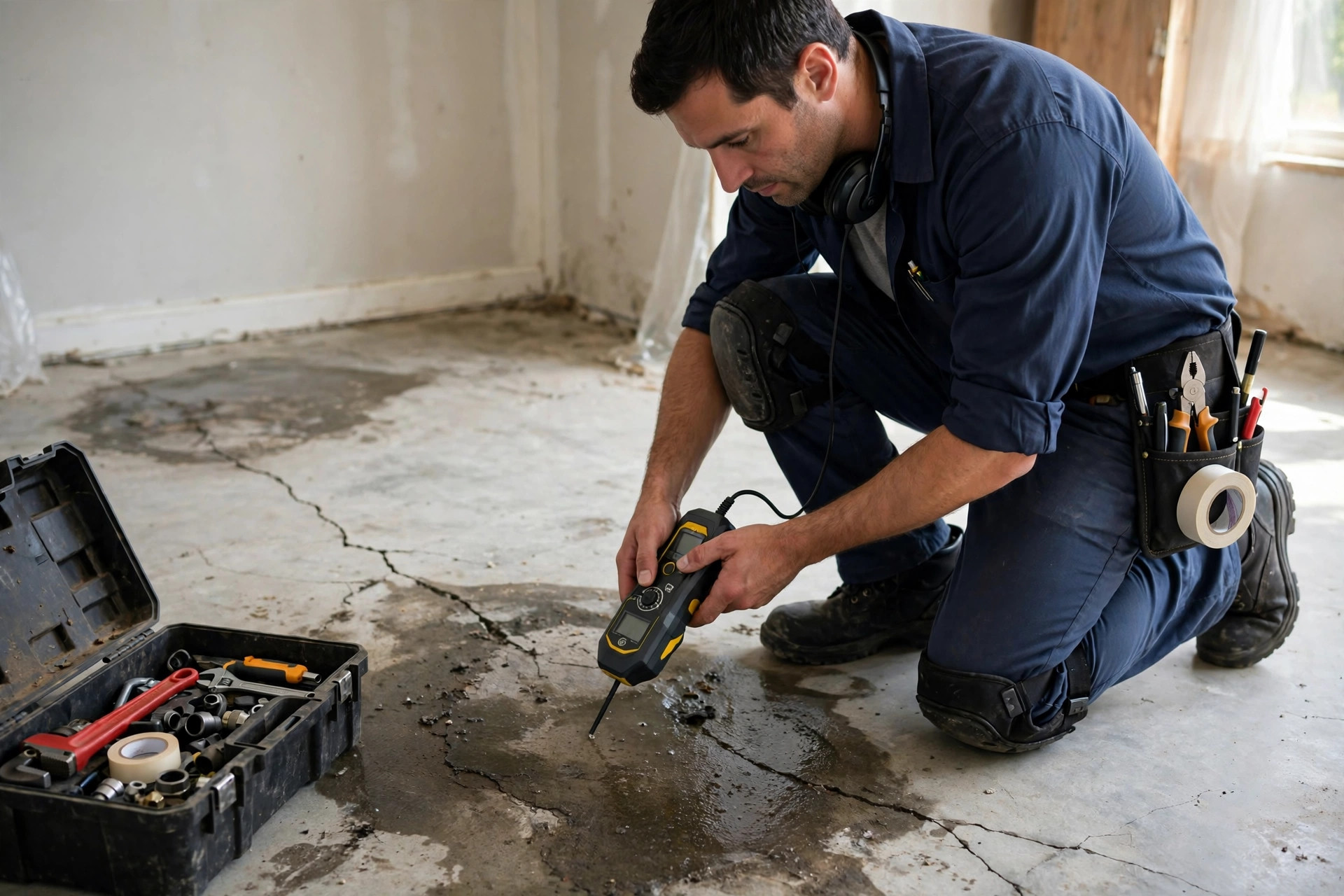
How Dangerous Is a Slab Leak, Really?
A slab leak is a leak in a water or drain pipe buried under your home's concrete foundation. Because the pipe is hidden, the water escapes where you cannot see it, soaking the soil under the slab and migrating upward into flooring, walls, and baseboards. Nothing about that is immediately life-threatening. The danger builds in stages:
- Weeks: moisture reaches flooring and baseboards; mold can begin in damp materials; your water bill climbs.
- Months: soil under the slab erodes; floors warp or crack; musty odors spread; mold colonies establish in walls and under flooring.
- Many months to years: uneven settling can crack the slab and walls, turning a plumbing repair into a foundation repair project as well.
That timeline is the whole story. A slab leak found in its first weeks is a plumbing job. The same leak found a year later can be a plumbing job plus a flooring job plus a mold-remediation job plus a foundation job. If you already suspect a leak, the signs guide in this series — how to tell if you have a slab leak — can help you confirm it before you call.
One honest correction first: the leaking water itself is not poisonous. Clean supply water under your slab is ordinary drinking water. The health risk comes from what standing moisture grows — mold and mildew — and the structural risk comes from what escaping water washes away — the soil supporting your slab. A drain-line or sewer-line leak is the exception: that water is contaminated, and any sewage smell moves the job straight to the emergency category below.
Mold and Health: The First Danger to Arrive
Mold is usually the earliest real danger, because it needs only three things — moisture, organic material, and warmth — and a slab leak supplies all three under your floors. Water migrating up through the slab soaks carpet padding, wood flooring, drywall, and baseboards. In that warm, dark, damp space, mold and mildew can establish within weeks of a leak starting, long before any crack appears in a wall.
The health effects are the familiar ones: allergy symptoms, coughing, worsened asthma, sinus irritation, and skin irritation from contact with contaminated materials. Children, elderly people, and anyone with asthma or a weakened immune system are affected first and worst. Because mold can spread through wall cavities and, once airborne, through your HVAC system, a leak in one room can eventually affect air quality through the whole house.
This does not mean every slab leak means a house full of toxic mold. It means moisture that stays in place for weeks is a mold risk by definition — and the longer it stays, the larger and more expensive the cleanup. Mold remediation is often the slowest, most disruptive part of a late-caught slab leak repair, which is why early detection matters more than any single repair method.
A raw sewage smell, or any sign that a drain or sewer line (rather than a supply line) is leaking under the slab, is not a wait-and-see situation. Sewage water carries bacteria that clean supply water does not. Shut off water use in the affected fixtures and call for water leak detection and repair promptly.
Foundation Damage: The Most Expensive Danger
Under your slab is compacted soil, and that soil is doing structural work: it supports the concrete evenly across the whole footprint of your home. A leaking pipe washes that support away, grain by grain. As soil erodes, sections of slab lose support and settle unevenly. The visible results arrive in order: hairline cracks in floors and walls, doors and windows that start sticking, tile that cracks along a line, and in long-neglected cases, significant slab movement.
Edmond homes face this risk more sharply than most, because central Oklahoma's expansive clay soil already moves with every wet-dry cycle — swelling when wet, shrinking when dry. A leak adds a constant water source to soil that is already restless, and the pipe that leaked in the first place was often stressed by that same soil movement. Neighborhoods with older copper lines, like Oak Tree, and newer builds on active soil, like Coffee Creek, both sit on this soil, so neither age nor newness removes the risk.
Total structural failure from a slab leak alone is rare and takes a long period of neglect — most homes never get there. But the step before it, a cracked and settling slab that needs foundation work on top of plumbing work, is common enough that no honest guide can call a slab leak "just a plumbing problem." Once the slab itself is involved, the repair bill changes category entirely.
Ruined Floors, Walls, and Belongings
The most visible damage is also the most certain. Water under pressure has nowhere to go but up, and it goes up through your floors. Hardwood warps and cups. Laminate swells and separates. Carpet padding stays damp and starts to smell. Tile cracks as the slab beneath it shifts. Baseboards swell, paint bubbles, and drywall wicks moisture upward from the floor line.
This damage is not cosmetic trivia: once wood flooring has cupped or carpet padding has stayed wet long enough to mold, replacement — not drying — is the usual outcome. Furnishings sitting on the floor in the affected area soak up the same moisture. And because the leak is hidden, homeowners often blame the flooring itself, or a spill, or humidity, and replace the floor without fixing the water source underneath — only to watch the new floor fail the same way. If flooring damage keeps returning in the same room, suspect the slab before you suspect the floor.
The Quieter Hazards
Three smaller dangers round out the picture:
- Electrical risk. Persistent moisture near floor-level outlets, wiring, and appliances creates a shock and short-circuit risk. It is uncommon, but it is the reason standing water near outlets should never be waded through, and why power to a flooded area should be switched off at the breaker.
- Wasted water and money. A pressurized pinhole leak can waste hundreds of gallons a day, every day, until it is fixed. The bill is the smallest cost in the long run, but it is often the first warning sign — and it never stops on its own.
- Yard and exterior damage. A supply line that runs out under the yard can flood landscaping, kill grass, and undermine walkways and patios from below, just as it undermines the slab.
None of these alone makes a slab leak an emergency. Together, they are why "monitor it for a few months" is bad advice for a confirmed leak.
How Serious, How Fast: The Honest Table
| Danger | How certain if ignored | How fast it develops | How costly it gets |
|---|---|---|---|
| Mold and poor indoor air | High — damp materials mold reliably | Weeks | Moderate to high (remediation is slow) |
| Foundation settling and cracks | Moderate — depends on soil and leak size | Months to years | High (foundation work dwarfs plumbing work) |
| Ruined flooring and finishes | Very high — water rises through floors | Weeks to months | Moderate (replacement, not repair) |
| Electrical hazard near moisture | Low, but serious when it happens | Any time water reaches wiring | Potentially severe |
| Wasted water and rising bills | Certain | Immediately, daily | Low to moderate, but never stops |
Read the table as a decision tool, not a scare sheet: the top three rows are the reason to act this week, not the reason to panic tonight — unless the emergency signs below are present.
When a Slab Leak IS an Emergency
Most slab leaks allow a scheduled detection visit within days. Call it an emergency — same-day, and shut off the main water supply first — if you see any of these:
- Standing water indoors with no visible source, or a wet patch spreading visibly across a floor.
- A sewage smell or any sign of a drain-line leak under the slab.
- A wide area of hot floor, or the sound of rushing water under the floor — both suggest a large, active supply-line break.
- Water near electrical outlets or appliances, or any sparking, buzzing, or breaker tripping near a damp area.
For anything in that list, shut off the main water supply, switch off power to the affected area at the breaker if water is near outlets, and call an emergency plumber rather than waiting for a routine appointment. If none of those are present — a bill spike, a warm spot, a musty smell, a small crack — you still should not wait months, but a prompt scheduled visit is the right move. Detection comes first: acoustic listening, thermal imaging, and pressure testing locate the leak before any concrete is opened, and the repair options afterward — spot repair, rerouting, or repiping — depend on what detection finds.
What to Do If You Suspect a Slab Leak
- Confirm the suspicion cheaply. Turn off every tap and appliance, then watch your water meter for 15–20 minutes. If it keeps moving, water is escaping somewhere in the system.
- Note the evidence. Which rooms show warm spots, dampness, odor, or cracks? That detail genuinely helps the technician narrow the search.
- Know your shutoff. Locate the main water shutoff valve and confirm it turns, so you are ready if signs worsen.
- Book detection, not a repair quote. An honest provider locates the leak first and prices the repair second — because the right repair depends on exactly where, and how badly, the pipe has failed.
When you call Edmond Slab Leak Pros at (572) 205-4235, describe what you are seeing — the bill, the warm spot, the smell, the crack. We connect you with an independent local plumbing provider who can run the full slab leak detection sequence and explain your options once the leak is located. Edmond Slab Leak Pros is a referral service: we connect homeowners with independent local plumbers, and the plumber who visits handles the detection and repair. Our office is at 2803 Broadway Ct, Edmond, OK 73013.
Are Slab Leaks Dangerous? Questions, Answered
Straight answers to the questions Edmond homeowners ask us most.
Can a slab leak make you sick?
The water itself is usually clean supply water, but the mold and mildew that grow in persistently damp flooring and walls can trigger allergies, asthma flare-ups, and respiratory irritation — especially in children, elderly people, and anyone with breathing conditions. A sewer-line leak is a different, more direct health hazard because the water is contaminated.
Can a slab leak cause my house to collapse?
Collapse from a slab leak alone is extremely rare and would require a very long period of neglect. What is realistic, and common enough to take seriously, is uneven settling that cracks the slab, walls, and floors and requires foundation work in addition to plumbing work.
How long can I safely ignore a slab leak?
There is no safe waiting period once a leak is confirmed. The damage is cumulative: every week adds water damage, mold growth, and soil erosion that the pipe repair itself will not undo. A scheduled visit within days is reasonable for a suspected leak with no emergency signs; months of waiting is not.
Is a slab leak covered by insurance?
Often, partially. Many policies cover the cost of accessing the leak and the resulting water damage, but not the repair of the failed pipe itself, and every policy words it differently. Photograph visible damage, keep the detection report, and call your insurer before authorizing the repair.
What should I do first if I think I have a slab leak?
Run the water meter test with everything off, note which rooms show signs, and book detection. Do not start by opening concrete or replacing flooring — both are wasted if the leak underneath is still running.