
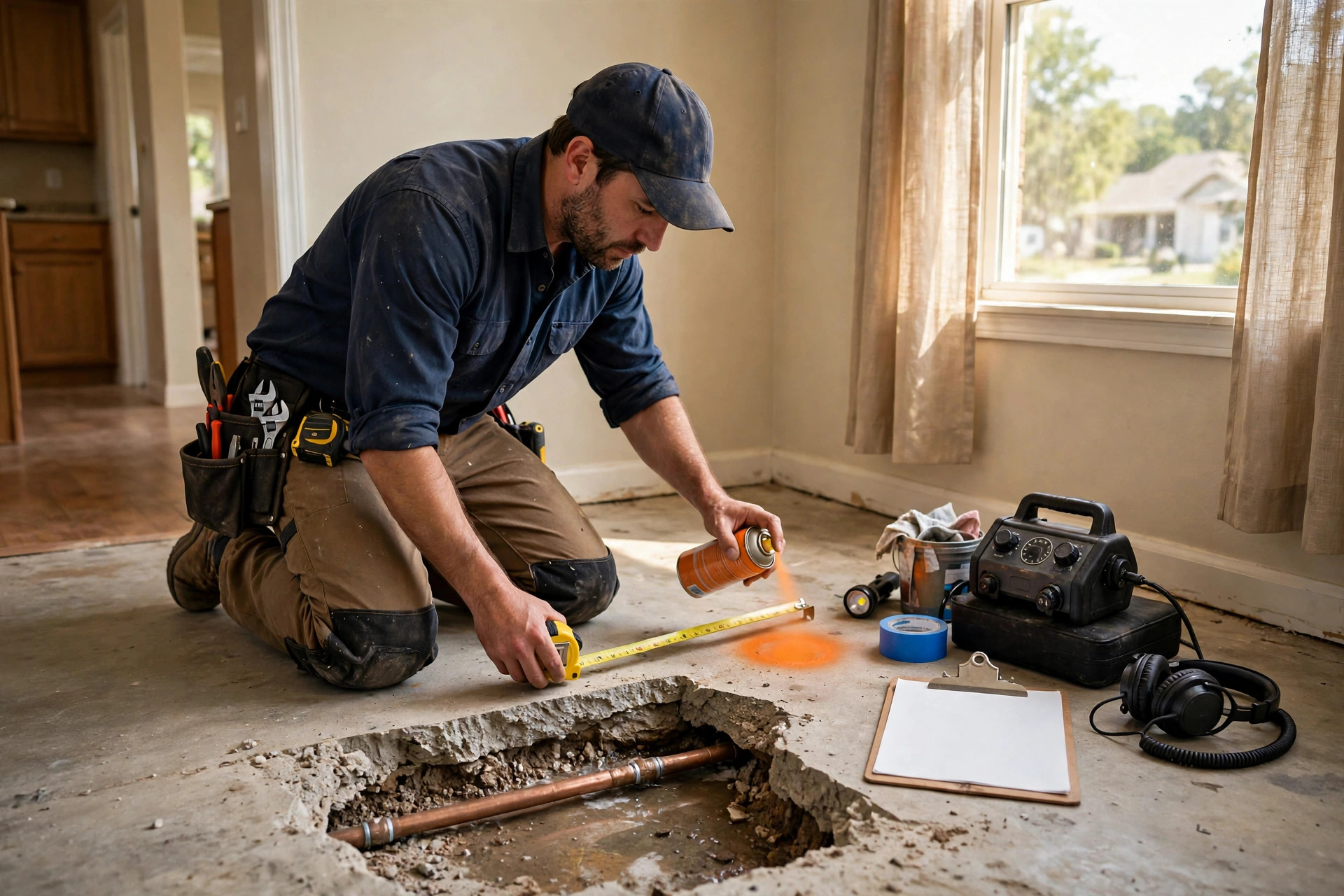
Slab Leak Repair Cost at a Glance
Here is what the most common repair paths cost. These are the plumbing-work numbers; detection and finish restoration are separate line items covered below.
| Repair method | Typical cost range | When it's used |
|---|---|---|
| Pinhole / small spot repair | $150–$800 | Tiny single leak, pipe otherwise healthy |
| Spot repair (open slab, replace section) | $500–$2,500 | One isolated leak with good access |
| Pipe rerouting (bypass through walls/attic) | $600–$5,000 | Leak is hard to reach, or pipe is aging elsewhere too |
| Epoxy pipe lining (trenchless) | $2,000–$6,000 | Coating the inside of existing pipe; not suitable for every pipe condition |
| Full repipe of the home | $4,000–$15,000+ | System-wide aging, recurring leaks, whole-house replacement |
Keep in mind these ranges come from national 2026 cost data, and local quotes vary. Edmond-area labor typically sits near the national average — noticeably less than the coastal markets some national cost guides are built around. What pushes a specific job up or down the range is almost always one of five drivers.
What Slab Leak Detection Costs
Detection is billed separately, and it is the one line item you should never skip. Slab leak detection — acoustic listening, thermal imaging, and pressure testing to pinpoint the leak before any concrete is cut — typically costs $150 to $500.
That fee pays for itself immediately. A precise location means the repair opens the smallest possible area, which is what keeps a $1,200 spot repair from becoming a $4,000 excavation. Any provider willing to quote a repair without locating the leak first is asking you to pay for their guesswork — that is the one quote to decline.
The 5 Things That Decide Your Price
1. The repair method. This is the biggest lever. A spot repair opens the slab at one point; a pipe rerouting abandons the buried line entirely and runs new pipe through walls or the attic; a trenchless pipe repair coats the existing pipe from inside. Each method has its own labor and material profile — and the right one depends on the leak's location and the condition of the rest of the system, not on which is cheapest. (The full comparison of methods is in our guide to how slab leaks are fixed.)
2. Leak location and accessibility. A leak under a utility room or garage costs far less to reach than one under a finished kitchen with tile floors, cabinetry in the way, or multiple rooms of hardwood above it. More demolition and more careful restoration means more hours and more material.
3. Soil and slab conditions in Edmond. Much of Edmond sits on expansive clay soil that swells and shrinks with moisture — and a home's pipe stock ages with it. In established neighborhoods like Oak Tree, where copper lines have been flexing for decades, one leak often signals that the surrounding pipe is fatigued too. That can tip the recommendation from a cheaper spot repair toward a reroute or even a repiping — a higher plumbing bill, but one that doesn't come back for round two in eighteen months.
4. What happens to the concrete and the finish. Breaking concrete is the smaller part; putting the floor back is the larger one. Concrete patching, re-leveling, and re-pouring are usually in the plumber's scope — but the flooring above the patch often isn't. Tile, hardwood, and carpet over the repair zone may need partial replacement or a full-room match, and that work is frequently quoted separately.
5. Permits and inspections. Edmond plumbing work typically runs $150–$200 in permit fees, and the schedule has to accommodate inspection. Legitimate providers include this in the written quote; if a quote has no permit line, ask why.
The Extras Most Quotes Leave Out
Two homeowners can get "the same repair" and pay very different totals, because these items sit outside the plumbing line item:
- Finish restoration. The biggest hidden cost. A spot repair under a tiled bathroom can leave you with a patched concrete slab and no matching tile — re-tiling one bathroom can add $1,000–$3,000 on its own, on top of the plumbing bill.
- Water damage restoration. If the leak ran long enough to soak flooring, drywall, or invite mold, restoration is a separate trade with its own bill — commonly $1,000 to $10,000+, priced per square foot like any other water damage. This is the real cost of waiting.
- Temporary costs. Reroutes and repipes can take days (our repair timeline guide covers duration); if water must be shut off overnight, factor in the inconvenience and any short-stay costs.
Before you sign, ask for the quote in writing, itemized: detection, pipe repair, concrete restoration, finish restoration, permits. If "finish restoration" isn't on it, it isn't included — ask what covering it would cost or who they recommend.
Will Insurance Pay for Any of This?
Often, partially. Most standard homeowners policies cover the cost of accessing the leak (tearing out concrete and restoring it) and the resulting water damage, but not the repair of the failed pipe itself — and policy wording varies widely. Photograph everything, keep the detection report, and call your insurer before authorizing the work. We covered the details in does homeowners insurance cover slab leak repair.
The Delay Multiplier: Why Waiting Makes It More Expensive
A slab leak never seals itself, and the price of waiting isn't just the repair getting older — it's the bill growing into categories the original repair never touched. A $2,000 spot repair becomes a $10,000+ project when months of undetected water erode the soil under the slab (now a foundation repair conversation) or soak finishes into a mold remediation job. If you're seeing the warning signs, detection this week is almost always the cheapest option on the table.
Slab Leak Cost Questions, Answered
Straight answers to the questions Edmond homeowners ask us most.
What's the cheapest way to fix a slab leak?
A spot repair of a single accessible leak is usually the cheapest path — sometimes under $1,000 all-in. But "cheapest" and "right" aren't always the same repair: if the pipe around the leak is corroded or fatigued, a slightly more expensive reroute can be cheaper over the life of the home than a second spot repair two years later.
Does a reroute cost more than opening the slab?
Not always. Spot repairs run $500–$2,500 and reroutes $600–$5,000 — the ranges overlap. When access is poor (finished floors, kitchens, bathrooms), rerouting through walls can actually cost less than demolishing and restoring expensive finishes, and it eliminates the failing buried line for good.
Why did my neighbor's slab leak cost twice what my quote says?
Because the quote you saw may not have included the same things: finish restoration, permits, and water-damage cleanup are where totals diverge. Compare itemized quotes line by line, not bottom-line numbers.
Can I get a quote without paying for detection first?
Reputable providers won't price the repair before they know exactly where the leak is — and you shouldn't want them to. Detection ($150–$500) is what makes the repair quote accurate. A repair price given sight-unseen is a guess, not a quote.
Is slab leak repair more expensive in Edmond than elsewhere?
Edmond-area pricing generally tracks near the national average. What varies by location isn't the labor rate so much as the soil and housing stock: expansive clay and decades-old copper, common in parts of Edmond, shift more jobs toward reroutes and repipes — which is why a local diagnosis matters more than a national average.